

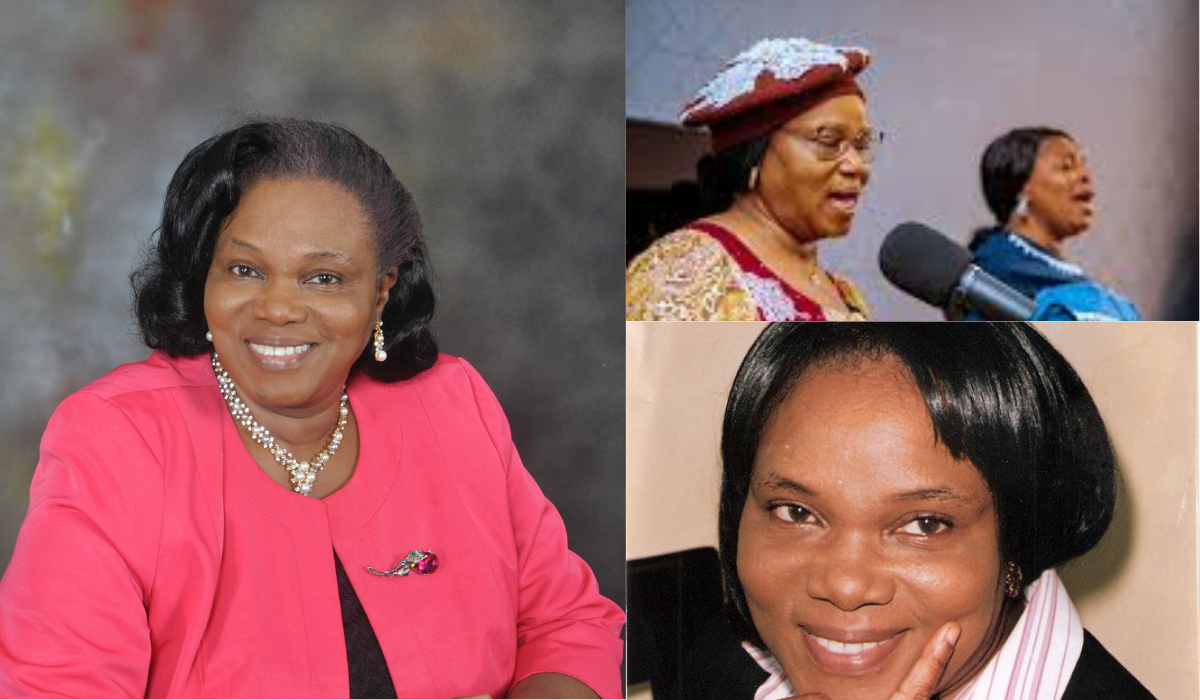
On Friday, March 13, 2026, the Nigerian gospel music community received news that brought an outpouring of grief, memory, and gratitude across churches, social media, and ministry circles nationwide. Evangelist Rachel Olatoun Soetan — known to generations of Nigerian worshippers simply as Toun Soetan or Evangelist Shouet — had gone home to be with the Lord at the age of 73.
She leaves behind her husband, Titus Soetan, her family, and a gospel music legacy that shaped indigenous Christian worship in Nigeria across more than four decades of faithful ministry.
The Woman Who Wrote “Darling Jesus”
There is a generation of Nigerian Christians for whom the name Toun Soetan is inseparable from a single song — “Darling Jesus.” Simple, tender, deeply personal in its address to the Saviour, it became one of the most widely sung worship choruses in Nigerian church history. It was sung in Pentecostal revival meetings and Anglican Sunday services alike, in city churches and village chapels, by children who barely understood the words and by elders who had sung it for fifty years.
It is the kind of song that gets into the bones. The kind that comes back to you uninvited in moments of sorrow or gratitude. The kind that does what only the best gospel music does: it closes the distance between the worshipper and God.
Toun Soetan wrote it. And the church sang it. And now she is with the One the song was always addressed to.
A Life Born of Radical Conversion
Her story was itself a testimony. Born around 1953 in Lagos and raised in the Beere area of Ibadan, she came from a large Muslim family — her father reportedly had 28 children. She was originally named Alimat Sadia before her conversion to Christianity, a change that set the entire trajectory of her life in a new direction.
That conversion was total. She went on to found Trinity World Evangelical Ministry, where she served as a minister, teacher, and mentor for decades. She established a music college that trained generations of gospel singers and musicians — many of whom are prominent in Nigerian gospel ministry today. She was known for her fierce conviction that true evangelism should never be commercialised: she ministered freely, often refusing payment, believing that the gospel was a gift that could not be bought or sold.
Songs That Outlasted Their Season
Beyond “Darling Jesus,” Soetan’s catalogue included songs that became staples of Yoruba-speaking Christian worship: “Iye Ree,” “Gbe Jesus Ga,” “Ke Pe Jesu,” “Cast Your Burdens,” and “Train Up Your Child.” These were not polished studio productions chasing radio play. They were the fruit of prayer, revival meeting, and genuine spiritual encounter — songs rooted in Scripture and aimed at one thing: bringing people into the presence of God.
Her music gained its widest following during the early 1990s, a particularly fertile period for indigenous Nigerian gospel worship, when her choruses were heard at revival meetings and church programmes across the country. But unlike many songs of that era, hers never really went out of rotation. Forty years on, they were still being sung.
The Tributes — A Generation Speaks
The outpouring of tributes following her death spoke to the depth of her influence. Tope Alabi — herself one of Nigeria’s most beloved gospel voices — took to social media to write: “We say farewell to our beloved Mummy Toun Soetan, a true spiritual mother and a matriarch in gospel music. Her life was a reflection of Christ, and her impact in the gospel music ministry will never be forgotten. She lived for Christ and preached Him through her life and music. Though we will miss her, we are comforted knowing she has gone to be with the Lord. Rest well, Mama.”
Gospel artist Bukola Omowaye wrote: “Mama, heaven’s gain. The only time I had the opportunity to minister alongside Mummy Toun Soetan was a moment I cherished so much.” She recounted how she first encountered Soetan’s music as a child through her parents’ television — and how those songs laid a foundation for her own faith and ministry.
Shola Adesina paid tribute to a woman she described as “so peaceful and full of grace,” while music writer Kunle Bakare noted that beyond her recordings, “the late gospel music player will also be remembered for her music college, where she trained so many gospel music players, most of whom are reigning today.”
Gospel musician Peter Olaniyi simply posted: “We just lost another legend this morning, Mummy Toun Soetan. May the Lord be with the family and Daddy Titus Soetan.”
Coming Weeks After Another Loss
Her passing came just days after the gospel community was already reeling from the death of Taiwo Adegbodu — one half of the celebrated Adegbodu Twins — who died on March 1, 2026. The back-to-back loss of two pillars of a generation of Nigerian gospel music left the community in a season of deep grief and solemn reflection.
These were not merely musicians. They were the voices of a revival era — the people whose songs carried the faith of a generation and trained the next one. Their passing marks the end of a chapter in the story of Nigerian Christianity.
A Legacy That Will Keep Singing
What is remarkable about Toun Soetan’s legacy is not that she was famous. By the standards of the global gospel music industry, she was not. She never had a major label deal or an international tour or a Grammy nomination. What she had was something rarer and more lasting: songs that went into the hearts of ordinary Nigerian believers and stayed there for decades, shaping the way an entire generation talked to Jesus.
“Darling Jesus” will be sung in Nigerian churches long after everyone who knew Toun Soetan personally is gone. That is the nature of genuine gospel music. It outlasts the singer because it was never really about the singer in the first place.
Rest well, Mama Toun. Heaven’s gain. 🕊️
Evangelist Rachel Olatoun Soetan is survived by her husband Titus Soetan, her family, and the countless lives shaped by her music and ministry.


